
Glass Hookah Base vs Acrylic Base: A Practical Guide to Material and Performance
Core keywords: glass hookah base vs acrylic base, hookah glass material, acrylic material base
FAQ Quick Guide:
A: The primary differences center on material properties: a glass hookah base offers superior flavor purity, visual clarity, and a premium feel, while an acrylic material base provides greater durability, lighter weight, and enhanced resistance to impact.
A: The non-porous nature of hookah glass material ensures it does not absorb residual flavors, offering a cleaner and more consistent taste profile compared to acrylic, which may retain subtle scents over time.
A: Choose a glass hookah base for home use, flavor-focused sessions, and aesthetic appeal. Opt for an acrylic material base for portability, outdoor or lounge settings, and situations where durability against accidental drops is a priority.
Every premium hookah setup is fundamentally defined by its foundation—the base. This essential chamber, where water cools, filters, and stabilizes smoke before its journey, significantly influences the entire experience. The decision between a glass hookah base vs acrylic base determines not only the visual character of your apparatus but also its practical performance, maintenance routine, and overall longevity.
As contemporary hookah design continues to innovate, a clear understanding of hookah glass material and acrylic material base properties empowers users to make informed choices that balance aesthetic preferences with functional needs for flavor purity and durability.
Material Comparison: Hookah Glass Material vs Acrylic Material Base
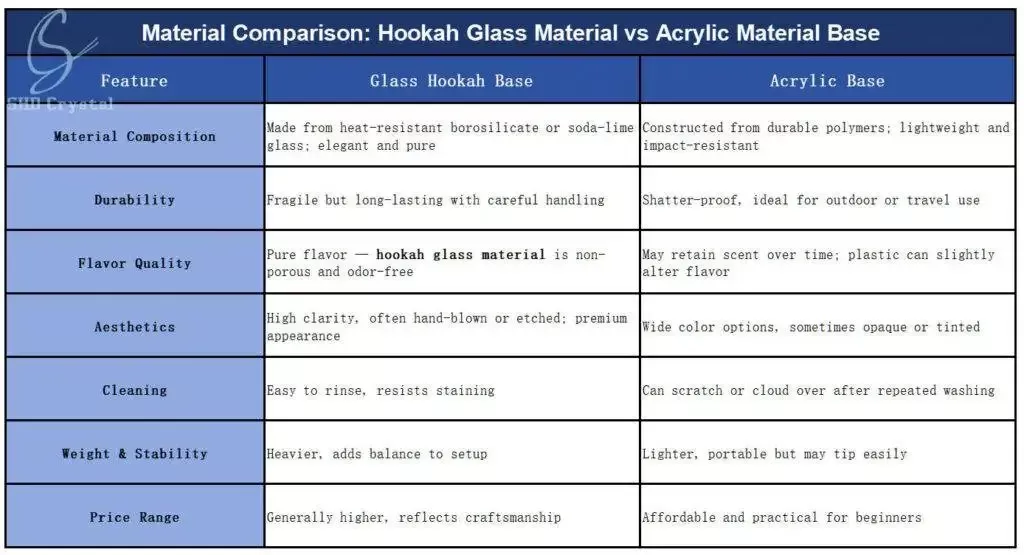
The debate between glass hookah base vs acrylic base reveals two distinct philosophies in material selection. Hookah glass material, typically borosilicate or lead-free crystal, is celebrated for its chemical inertness, optical clarity, and traditional elegance. In contrast, an acrylic material base is a modern polymer solution prized for its impact resistance, lightweight nature, and design versatility.
| Feature | Glass Hookah Base | Acrylic Hookah Base |
|---|---|---|
| Material Composition | Borosilicate or soda-lime glass | Polymethyl methacrylate (PMMA) |
| Clarity & Aesthetics | Exceptional optical transparency; premium, timeless look | Good clarity; can yellow over time; modern, versatile styling |
| Durability & Impact Resistance | Fragile; susceptible to cracking or shattering | High impact resistance; very difficult to break |
| Weight | Heavier; provides excellent stability | Lightweight; highly portable |
| Flavor Preservation | Non-porous; does not retain flavors or odors | Slightly porous; may retain scents without thorough cleaning |
| Heat Tolerance | High thermal resistance; handles temperature changes well | Moderate heat tolerance; can warp under extreme heat |
| Maintenance | Easy to clean; resistant to staining | Requires gentle cleaning to avoid scratching |
| Ideal Use Case | Home use, collector pieces, flavor-purist sessions | Travel, outdoor use, lounges, high-traffic environments |
Performance and Sensory Experience
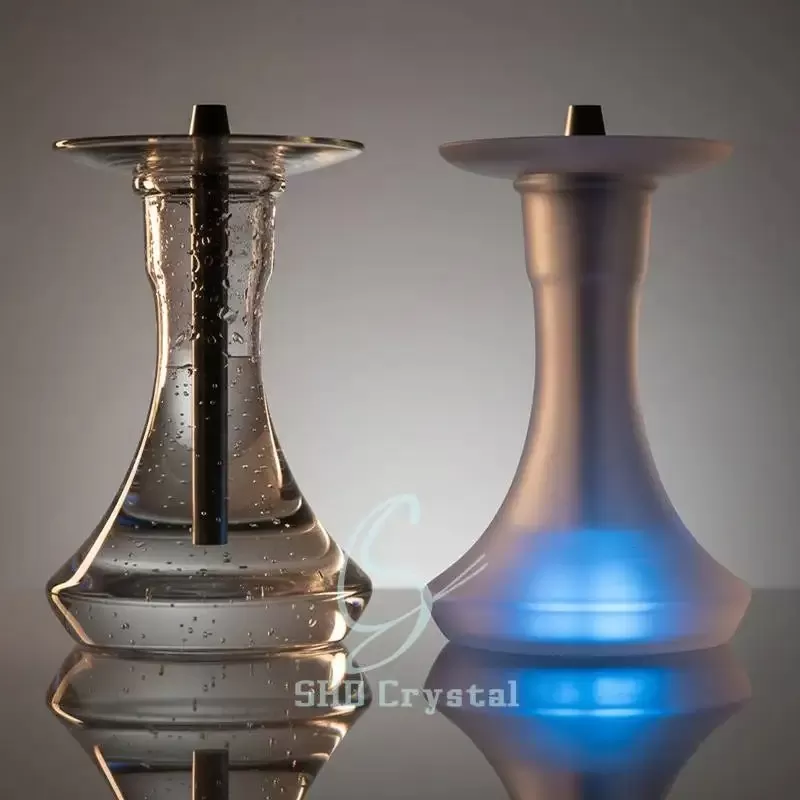
The hookah glass material delivers a notably smooth and clean sensory experience. Its completely non-reactive surface ensures that no residual flavors from previous sessions taint the tobacco's true profile. The transparency of glass allows users to monitor water levels and smoke density in real time, providing greater control over the session's coolness and smoothness.
Conversely, an acrylic material base excels in practical resilience. Its primary advantage is surviving accidental bumps or drops that would typically destroy a glass base. However, its slightly porous polymer structure can trap subtle aromas, necessitating more diligent cleaning to maintain flavor integrity across different tobacco blends. In terms of thermal performance, glass effectively dissipates heat around the stem connection, while acrylic may retain warmth for longer periods.
Design, Aesthetics, and Maintenance
When evaluating glass hookah base vs acrylic base from a design perspective, glass offers timeless appeal through clear, frosted, or artistically colored finishes, often featuring hand-cut patterns or crystal engraving. Each piece can become a collectible work of art.
Acrylic allows for bold, experimental shapes and the integration of functional elements like built-in LED lighting systems, creating dynamic visual effects popular in modern lounge settings. While it may lack the inherent luxury feel of glass, its design flexibility is unmatched.
Maintenance differs significantly: glass bases are easily cleaned with warm water and mild agents like lemon juice or baking soda, maintaining clarity for years. Acrylic requires gentler care with mild soap and soft cloths to prevent clouding or surface scratching, which can compromise its appearance over time.
Environmental and Long-Term Considerations
From an environmental standpoint, glass is the more sustainable choice. Hookah glass material is fully recyclable and inert, posing no risk of chemical off-gassing. Its longevity, when handled with care, supports a reduce-and-reuse philosophy.
While acrylic is theoretically recyclable, its practical recycling rate is lower. Its environmental benefit lies in its extreme durability—a well-made acrylic material base is unlikely to need replacement, reducing waste from broken bases in commercial or active settings.
Conclusion: Choosing Your Foundation
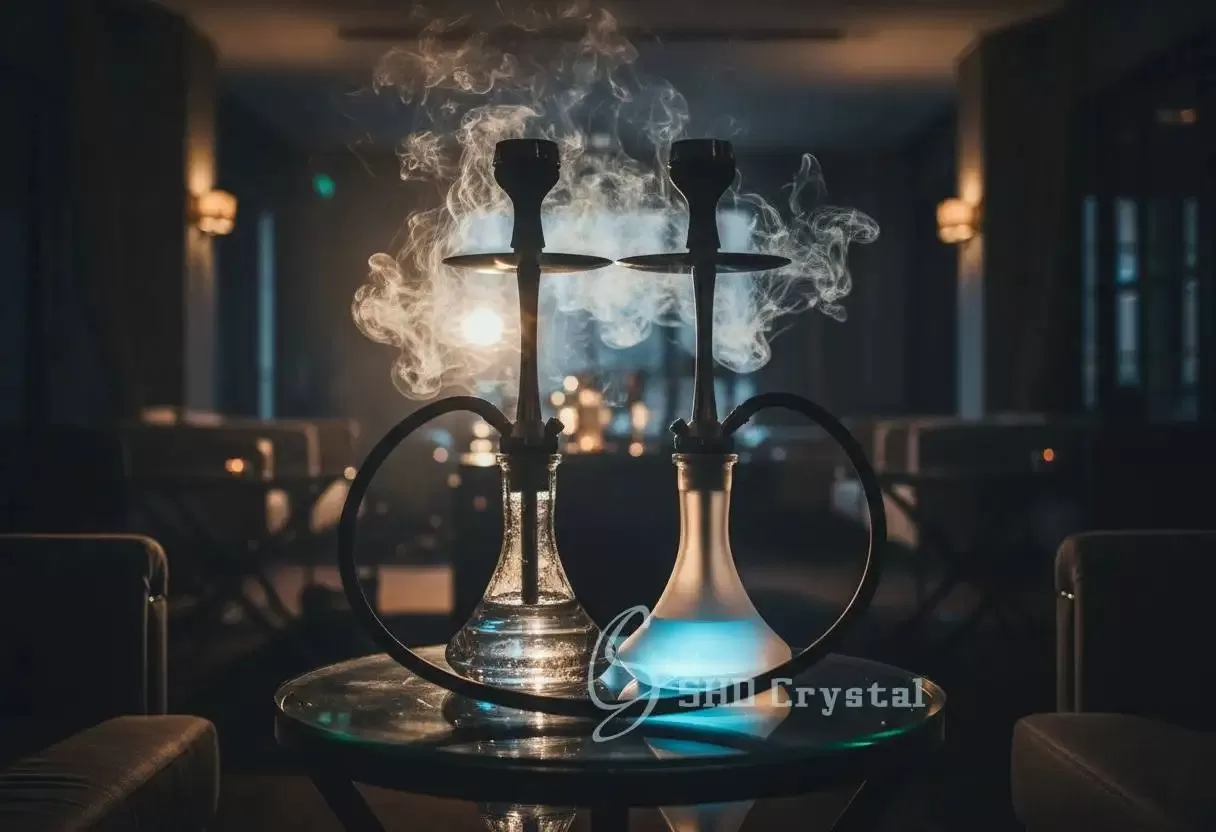
The final choice in the glass hookah base vs acrylic base debate hinges on personal priorities and usage context. Select a glass hookah base if your priorities are unmatched flavor purity, aesthetic elegance, and a traditional, refined smoking ritual. Opt for an acrylic material base if your needs center on rugged durability, portability, affordability, and suitability for active or social environments.
Modern hookah culture accommodates both philosophies, offering enthusiasts the freedom to choose a foundation that best complements their lifestyle, environment, and sensory preferences.
Find Your Perfect Base
Whether you desire the classic purity of a glass hookah base or the resilient practicality of an acrylic material base, our custom design services can bring your vision to life. Explore premium materials and craftsmanship tailored to your specific needs.
Partner with us to develop a custom, next-generation shisha device. Contact our design and manufacturing team to start your project